


 Home
HomeWhat Are The Differences Between Australian Cables And International Cables?
 GERITEL
 Nov 01,2025

With the increasing number of international engineering projects, the standard systems for cables developed by different countries and regions are receiving more and more attention. Among them, Australian Standard Cables (AS/NZS standard) and International Standard Cables (IEC standard) are two of the most representative types. For professionals engaged in electrical design, engineering construction, or export trade, a common question is: "What are the differences between Australian Standard Cables and International Standard Cables? Can they be substituted for each other?" This article will comprehensively analyze the differences between the two from multiple dimensions, including standard systems, technical requirements, performance characteristics, certification systems, and application scenarios, to help readers make more scientific and rational decisions in cable selection and procurement.
1. What is Australian Standard Cable (AS/NZS Standard)?
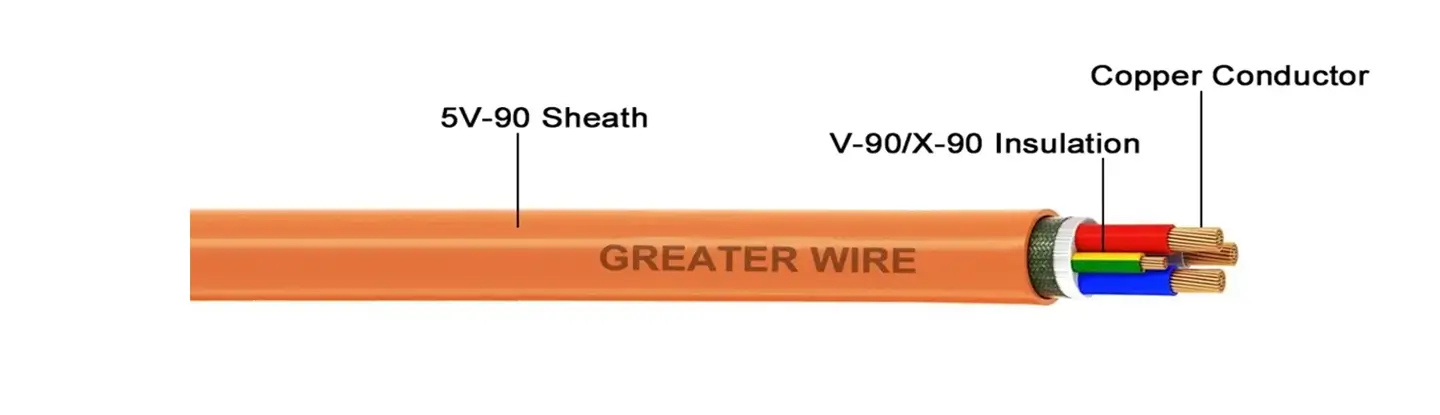
Australian Standard Cable is a cable manufactured according to the Australian/New Zealand Standards System and is primarily used in the Australian and New Zealand markets. This standard was jointly developed by Standards Australia and Standards New Zealand, emphasizing safety, reliability, and environmental adaptability.
Australian Standard Cables must be certified by SAA or RCM before they can be sold and used in the local market. Its main characteristics include:
- Uses high-purity oxygen-free copper conductors with low resistivity;
- Employs low-smoke halogen-free (LSZH) insulation and sheath materials, making it environmentally friendly and safe;
- Possesses excellent UV resistance, high-temperature resistance, and aging resistance;
- Particularly suitable for outdoor, coastal, and high-temperature environments.
2. What are International Standard Cables (IEC Standards)?
International standard cables are cables designed and manufactured according to the International Electrotechnical Commission (IEC) standards system, and are widely used in Europe, Asia, Africa, and the Middle East. The goal of IEC standards is to achieve compatibility and interoperability of electrical products globally, and its design philosophy is "universality, safety, and economy."
Cables under IEC standards have the following characteristics:
- High versatility, suitable for multiple international markets;
- Standardized electrical performance, facilitating multinational engineering design;
- Flexible material and structural requirements, suitable for use in different climatic conditions;
- Most countries have developed their own derivative standards based on IEC (such as China's GB and Europe's EN).
3. The main differences between Australian cables and international standard cables
| Category | Australian Standard Cable (AS/NZS) | International Standard Cable (IEC) |
| Standard System | Based on Australian/New Zealand Standards (AS/NZS 5000 series) | Based on International Electrotechnical Commission (IEC) standards |
| Certification | Requires SAA or RCM certification before being marketed or used in Australia | No unified certification; varies by region (e.g., CE, VDE, TÜV, etc.) |
| Applicable Market | Primarily for Australia and New Zealand | Used globally across Europe, Asia, Middle East, and Africa |
4. How to choose the right cable standard?
When selecting cables, the first step is to clearly define the project location and applicable regulations. This is a crucial factor in determining which standard to use. Safety regulations, climates, and certification systems vary across regions; therefore, choosing a matching cable standard not only affects project quality but also its success in passing acceptance tests.
- If the project is located in Australia or New Zealand, Australian standard cables conforming to AS/NZS standards must be used.
- If the project is located in Asia, Europe, the Middle East, or Africa, IEC international standard cables are preferred due to their greater versatility and cost-effectiveness.
- For export-oriented manufacturers, different versions of their product line should be flexibly configured according to the standard requirements of the target market.
During the cable procurement process, the following should also be carefully checked:
- Check if the cable outer layer clearly marks the standard number (e.g., AS/NZS 5000.1 or IEC 60227);
- Confirm whether the cable holds valid certification certificates (e.g., SAA, VDE, TÜV, CE, etc.);
- Check if the manufacturer has internationally recognized testing reports (e.g., CB Report).
Australian Standard (AS/NZS) cables and International Standard (IEC) cables differ significantly in their standard systems, certification methods, material requirements, performance characteristics, and application environments. AS/NZS cables prioritize safety, weather resistance, and environmental friendliness, making them suitable for high-standard markets such as Australia and New Zealand. IEC cables, on the other hand, are widely used in global engineering projects due to their versatility, flexibility, and cost-effectiveness.
During the selection process, companies and engineering teams should choose the appropriate cable type based on the regulations, environmental conditions, and customer standards of the project location.
Contact Us Today
If you require professional cable selection advice or would like to learn more about the technical details of AS/NZS and IEC cables, please feel free to contact us.
Dongguan GERITEL Electrical Co., Ltd. has many years of experience in international cable manufacturing and export, and can provide you with high-quality cable solutions that meet AS/NZS, IEC, and other standards.
Tel/WhatsApp/WeChat: +86 135 1078 4550 / +86 136 6257 9592
Email: manager01@greaterwire.com
 Flame Retardant Cables vs. Fire Resistant Cables vs. Fire Alarm Cables: What Are the Differences?



 Building 2, No. 40 Luxi 2nd Road, Liaobu Town, Dongguan City, Guangdong Province, China