



 Home
HomeFlame Retardant Cables vs. Fire Resistant Cables vs. Fire Alarm Cables: What Are the Differences?
 GERITEL
 Nov 01,2025

In the event of a fire, the composition and ratings of cables determine whether they can contribute to the spread of fire or help control it. Some cables are designed to slow the rate of combustion, while others are specially designed to maintain circuit integrity even at extreme temperatures. Additionally, there are fire alarm cables, which serve as critical communication lines, triggering evacuation systems and notifying emergency responders.
However, the terms "flame retardant," "fire resistant," and "fire alarm" are often used interchangeably, leading to misunderstandings. In reality, these cables have very different uses, different manufacturing standards, and different testing conditions.
This article will explore their working principles, materials used, standards they meet, and optimal application scenarios, specifically introducing the differences between flame resistant cables, fire resistant electrical cables, and fire alarm cables.
1. What Are Flame Retardant Cables?
Flame retardant cables are specially designed cables that can slow or prevent the spread of fire along their length. When exposed to flames or high temperatures, these cables are difficult to ignite; even if they do ignite, the combustion process quickly stops once the external ignition source is removed. In other words, they help control localized fires and prevent the fire from spreading along cable trays, conduits, or wall perforations, thereby reducing the risk of large-scale damage or casualties.
1.1 Working Principle
The fire resistance of flame retardant cables is achieved by adding flame-retardant additives to the cable's insulation and sheath materials. These additives—typically aluminum hydroxide, magnesium hydroxide, or phosphorus-based compounds—undergo a chemical reaction when heated.
They primarily function through three mechanisms:
Forming a protective char layer: When the outer sheath is exposed to flame, the material decomposes and forms a char barrier, isolating the inner layers from heat and oxygen.
Releasing non-combustible gases: During combustion, the additives release water vapor or carbon dioxide, diluting combustible gases and cooling the burning surface.
Suppressing Smoke and Toxic Emissions: Especially in low-smoke halogen-free (LSZH) materials, very little halogen acid gas is produced, making it safer for personnel and electronic equipment in confined spaces.
Through a combination of physical and chemical reactions, flame-retardant cables minimize flame spread and reduce smoke toxicity, thereby improving overall fire safety.
1.2 Typical Standards
Flame retardant cables must meet international testing standards for evaluating their flame-retardant performance. The most widely recognized standards include:
IEC 60332-1: Tests a single vertical cable sample to determine its self-extinguishing capability after ignition.
IEC 60332-3: Evaluates the flame spread of groups or bundles of cables under vertical tray conditions.
UL 1685: A North American standard used to evaluate flame spread distance and smoke emissions during vertical tray testing. Cables that meet these standards are certified to limit flame spread and prevent small flames from escalating into large fires.
1.3 Applications
Flame retardant cables are widely used in locations where fire prevention is critical but power supply is not required during a fire. Common applications include: commercial buildings and office buildings, industrial plants and manufacturing facilities, transportation systems such as subways and tunnels, and power distribution and control systems within residential and commercial infrastructure. These cables are ideal for general electrical wiring installations where higher security is required but high costs are undesirable.
1.4 Advantages and Disadvantages
Advantages: Flame retardant cable effectively slows the spread of fire, buying valuable time for evacuation and response. Flame retardant wire reduces smoke and toxic emissions, especially when using low-smoke halogen-free compounds. It can improve economic efficiency.
Disadvantages: Flame resistant wire cannot maintain electrical function under sustained fire conditions. It provides limited protection, especially in environments requiring continuous power supply in emergency situations.
2. What Are Fire Resistant Cables?
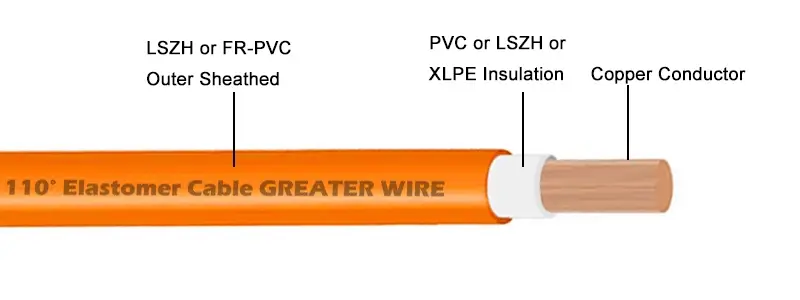
Fire resistant cables are specially designed cables that maintain circuit integrity and power transmission even when directly exposed to flames and high temperatures. Unlike flame-retardant cables, which primarily prevent the spread of fire, fire-resistant cables ensure that critical systems remain operational during a fire, allowing essential functions such as alarms, lighting, and fire pumps to continue working when most needed.
2.1 Working Principle
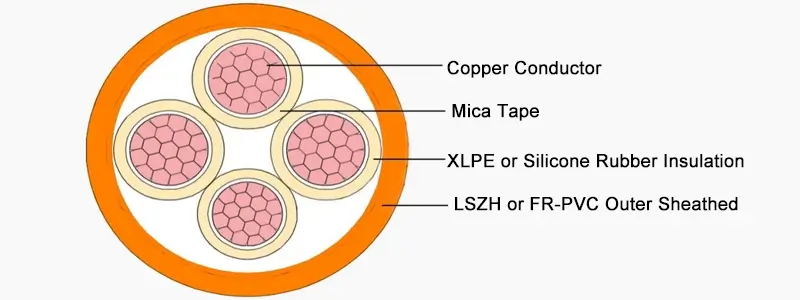
The key to the performance of fire-resistant cables lies in their multi-layered heat resistant structure. These cables typically consist of pure copper or tin-plated copper conductors and an insulation layer wrapped with mica tape, which acts as a fire barrier and can withstand temperatures up to 950°C.
The outer layer of mica tape is wrapped with a high-temperature insulating material, such as cross-linked polyethylene (XLPE), silicone rubber, or a special ceramic-forming compound. When exposed to flames, these materials form a hard, non-conductive ceramic layer that continues to insulate the conductor even after the polymer insulation layer burns out.
Finally, an outer low-smoke halogen-free (LSZH) or silicone sheath prevents mechanical damage and blocks the release of toxic gases.
This material combination enables the cable to maintain current transmission even under prolonged (60-180 minutes) direct flame exposure—crucial for life safety systems and emergency power circuits.
2.2 Typical Standards
Fire-resistant cables are tested and certified according to several international standards that assess their performance under simulated fire conditions:
IEC 60331: Tests the cable's ability to maintain circuit integrity for at least 90 minutes under flame and high-temperature exposure.
BS 6387: Tests the cable under flame (C), water spray (W), and mechanical shock (Z) conditions to simulate real emergency situations.
EN 50200: Evaluates the performance of small diameter fire resistant cables under combined fire and mechanical stress for 60 to 120 minutes.
2.3 Applications
Fire-resistant cables are used in locations where power continuity must be maintained during a fire. Common applications include: emergency lighting and evacuation systems; elevator and lift power circuits; fire pump and sprinkler control systems; fire alarm and smoke extraction systems; and hospitals, tunnels, power plants, and high rise buildings, where power outages can pose a serious threat to personal safety and property. Therefore, fire-resistant cables are a mandatory choice according to many building codes and safety regulations.
2.4 Advantages and Disadvantages
Advantages: Fire resistant cables maintain power supply during fires, ensuring life safety and emergency response. They meet stringent international safety standards (IEC, BS, EN). Low-smoke, halogen-free materials minimize toxic emissions and equipment damage. They provide reliable performance for mission-critical systems under extreme conditions.
Disadvantages: Fire resistant wires are more expensive than standard or flame retardant cables due to the use of advanced materials and testing methods. Installation requirements are more complex, including proper termination, bending radius control, and mechanical protection. They are typically heavier and less flexible, requiring specialized handling and wiring methods.
3. What Are Fire Alarm Cables?
Fire alarm cables are specialized low-voltage cables designed specifically for fire detection and alarm systems. Their primary function is to transmit control and signal data between fire alarm control panels, detectors, sensors, and notification devices such as flashing lights and sirens. Unlike standard cables, fire alarm cables are not designed for power supply but are optimized for reliable communication in fire or high-temperature environments, ensuring continuous operation of the alarm system during a fire.
3.1 Working Principle
The structural design of fire alarm cables prioritizes signal reliability, flame retardancy, and low smoke emissions. They are typically made of low-smoke halogen-free (LSZH) materials, which produce minimal smoke upon contact with flames and do not release toxic halogen gases—crucial for helping people see their surroundings and breathe during evacuation.
Standard fire alarm cables contain the following key components:
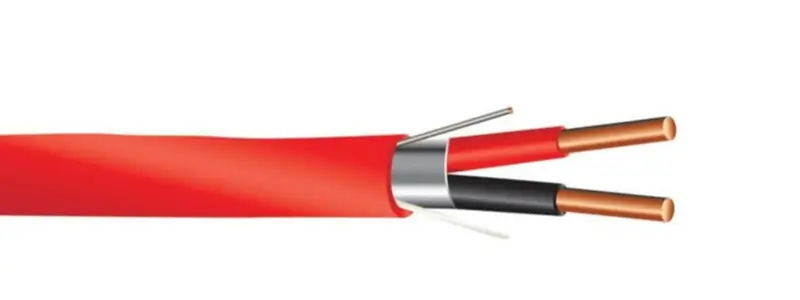
Conductor: Typically a solid or stranded copper conductor, with a gauge of 16 to 22 AWG, to ensure stable conductivity.
Insulation: Uses low-smoke halogen-free (LSZH) or polyvinyl chloride (PVC) insulation to prevent ignition and ensure electrical isolation between conductors. Twisted Pair Cable: Reduces electromagnetic interference (EMI) to maintain stable signal transmission, especially over long distances
Shielding (Optional): Aluminum foil or braided shielding for environments with high electrical noise.
Outer Sheath: Provides mechanical protection and determines its mounting class, such as FPL (General Purpose), FPLR (Riser Class), or FPLP (Flame Retardant Class), according to UL standards.
These characteristics work together to ensure that fire alarm cables maintain data integrity and minimize smoke generation, guaranteeing reliable operation of the alarm system even in emergency situations.
3.2 Typical Standards
Fire alarm cables undergo rigorous testing and certification according to fire safety and performance standards, including:
UL 1424: Specifies the construction, flame retardant testing, and voltage limiting for power-limited fire alarm cables in North America.
NFPA 72: National Fire Alarm and Signaling Standard, which specifies the design, installation, and maintenance of fire alarm systems.
BS 7629 / EN 50200 (Europe): Specifies low-smoke and circuit integrity performance for signal and control cables.
Compliance with these standards ensures the cable is fire-safe and electrically reliable, suitable for integration into life safety systems.
3.3 Applications
Almost all modern fire detection and protection networks use fire alarm wires. Common applications include: Fire alarm cables for smoke and heat detectors that sense and report fire conditions; Fire alarm control panels (FACPs) that receive and process alarm signals; Fire alarm cable notification devices, including flashing lights, sirens, and emergency loudspeakers; Automatic sprinkler systems requiring low-voltage control wiring; Emergency communication systems in public facilities, airports, hospitals, and schools. Their stable signal performance ensures timely alarm activation and emergency communication response—a key factor in life safety compliance.
3.4 Advantages and Disadvantages
Advantages: Fire alarm cables are made of low-smoke, halogen-free materials, improving personnel safety and reducing equipment damage. The twisted-pair and shielded design facilitates signal transmission. Lightweight and easy to install, it is ideal for complex alarm networks.
Disadvantages: Fire alarm wires are not suitable for power transmission because they are designed for low-voltage signal circuitry. Compared to fully fire resistant cables, their temperature resistance is limited.
4. Detailed Comparison: Flame Retardant Cable vs. Fire Resistant Cable vs. Fire Alarm Cable
| Feature | Flame Retardant Cable | Fire Resistant Cable | Fire Alarm Wire |
| Primary Function | Delay fire spread | Maintain power during fire | Transmit signals |
| Fire Duration Resistance | Up to 10–15 mins | 60–180 mins | Signal-level only |
| Test Standards | IEC 60332 | IEC 60331 / BS 6387 | UL 1424 / NFPA 72 |
| Typical Materials | PVC, LSZH | Mica, XLPE, Ceramic | LSZH, Copper |
| Voltage Rating | 300/500V | 600/1000V | Low voltage (24V–250V) |
| Cost | ★★☆☆☆ | ★★★★★ | ★★★☆☆ |
| Use Case | Commercial wiring | Emergency circuits | Alarm & communication |
5. Differences of Flame Retardant Cables, Fire Resistant Cables, and Fire Alarm Cables
Flame Retardant Cables are designed to prevent the spread of flames, reducing the risk of fire propagation through cable trays and conduits. They are ideal for general electrical installations in commercial and industrial buildings where containing the fire is the priority.
Fire Resistant Cables go a step further — they are engineered to maintain electrical operation even under fire conditions, so that emergency lighting, fire pumps, elevators, and evacuation systems continue functioning when power matters most.
Fire Alarm Cables serve as the communication lifelines of fire detection and alarm systems. They guarantee stable signal transmission between control panels, sensors, and alarm devices, which will provide timely warnings and safe evacuation.
Each type contributes differently to fire protection:
- Flame Retardant Cable → Prevents fire spread
- Fire Resistant Cable → Maintains system operation
- Fire Alarm Cable → Ensures signal transmission
Selecting the correct cable type for each system is not merely a technical decision — it is a critical safety measure. The right materials and certifications ensure compliance with international standards and provide the highest level of protection for people, equipment, and infrastructure.
If you are planning a new project or upgrading an existing system, make sure your wiring meets the right fire safety standards and operational requirements.
Contact Us Today
For expert advice and reliable fire-safe cable solutions, reach out to our professional team:
Dongguan GERITEL Electrical Co., Ltd.
Tel / WhatsApp / WeChat: +86 135 1078 4550 / +86 136 6257 9592
Email: manager01@greaterwire.com
 What Are The Differences Between Australian Cables And International Cables?



 Building 2, No. 40 Luxi 2nd Road, Liaobu Town, Dongguan City, Guangdong Province, China